
Hello all and welcome to the 6th weekly blog post.
In this weeks blog post I go over gun holsters. There will be a feature length movie on YouTube coming out at the same time. It can be found here- https://youtu.be/bhB_rOuOzoI Most gun owners I know, have boxes of different holsters for their different pistols. Ultimately this will get whittled down to a few that are used daily, for specific tasks (hunting, concealed carry, and tactical). My situation is a bit different than the other Minutemen. I have multiple pistols and holsters for different situations. Work has 3 pistols, One for duty Glock 19 with Stiner MPS and Streamlight TRL1, a 1911 with a Streamlight TRL 1 for occasions when I have to dress nice, or am doing administrative jobs, and lastly a Smith and Wesson Airweight in 38 Special as a backup. (Get off of me gun).
On my off duty time, I have a smorgasbord of different options based on what I am doing. From chest and thigh holsters in the woods, to belly bands and deep concealment holsters when I am in town. Just like everyone else, these were refined over time. I cannot stress this point enough, If you are going to carry a firearm in any capacity with a holster, get out and train. You will see in the YouTube video there are a few times I stumble with different holsters. That is because I do not use them very often. The ones I do carry on a daily basis are smooth, and I am quick on the draw and re-holster. That’s because I have 1000’s of draws and re holsters with my duty and concealed carry holsters. Muscle memory is key, and this takes no money to achieve, just time. I am constantly unloading my firearms and drawing from the holster (always following the gun safety rules). Summed up, under stress your body reverts to the lowest form of training you have, so train hard.
Unpopular opinion. If you are open carrying in public with a no retention holster, YOU ARE WRONG! Plain and simple. I see it all the time where I live, people in public carrying a firearm with only friction retention. Unless you train train in some form of physical weapon retention (BJJ, Krav Maga, Muay Thai) and are a wizard, this is a terrible idea and you are only opening yourself, your family, and the public up to unnecessary risk. Nothing is stopping a bad actor from getting your pistol and using it on you, your family, or the public. I understand some state laws prohibit concealed carry, but allow open carry. In that case, have some form of retention (I, II,III,IV,) and make sure you are actually training how to retain your firearm if someone tries to get it out of the holster. As soon as a gun is out of a holster, it is EVERYONE’S gun wether it was you who took the gun out, or someone takes the gun from you. That is how we train in Law Enforcement and the Military.
The only 2 holsters I own that have no retention and aren’t for concealed carry is a thigh holster for my Glock 19, and a chest holster for my Ruger GP 100. These are both woods holsters and I do not carry them in public. You will see me hiccup with these holsters. That is because, for me they are very niche in use. I have had both of them for 2 years and can count on one hand the amount of times I have carried them in the woods. I will only be recommending holsters I have used for a while and can say they are quality pieces of equipment.
Duty holsters with retention are what I would consider a niche item. As a police officer I deal with the public daily. Walk into large crowds, while conducting investigations and making arrests. Standing duty at events in my community, makes me a target. I have a uniform, badge, gun, and body armor people know what I am about, and know I am carrying a gun. The purpose of retention is to keep people from removing your gun from the holster. It gives law enforcement that few seconds to go hands on and keep the gun in its holster. If you plan on open carrying in public then I highly highly recommend at least 1 level of retention. The Safariland may not be for you but the Blackhawk might.
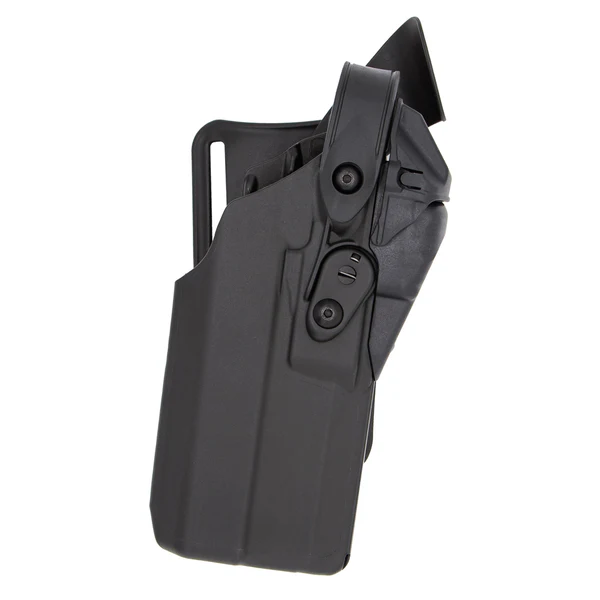
The first holster I use and recommend for anyone who is getting into Law Enforcement is the Safariland 7360 RDS. It can be found here- https://amzn.to/4dV38Z7. I have used it for 5 years and it has held up. If it gets super dirty, and refuses to secure the firearm, or refuses to come out smoothly, you will need to pour boiling water inside the mechanism, wait for it to dry, then use WD40. I have drawn and secured from this holster probably 10,000 times over the last 5 years in every environment imaginable. It is the most expensive holster I own, but the most well used, and most battle tested. This model will fit a TRL1 as well as an X300 from Sure Fire. I have heard it draws and holsters smoother with an X300 but again, I have not had an issue running a TRL1.
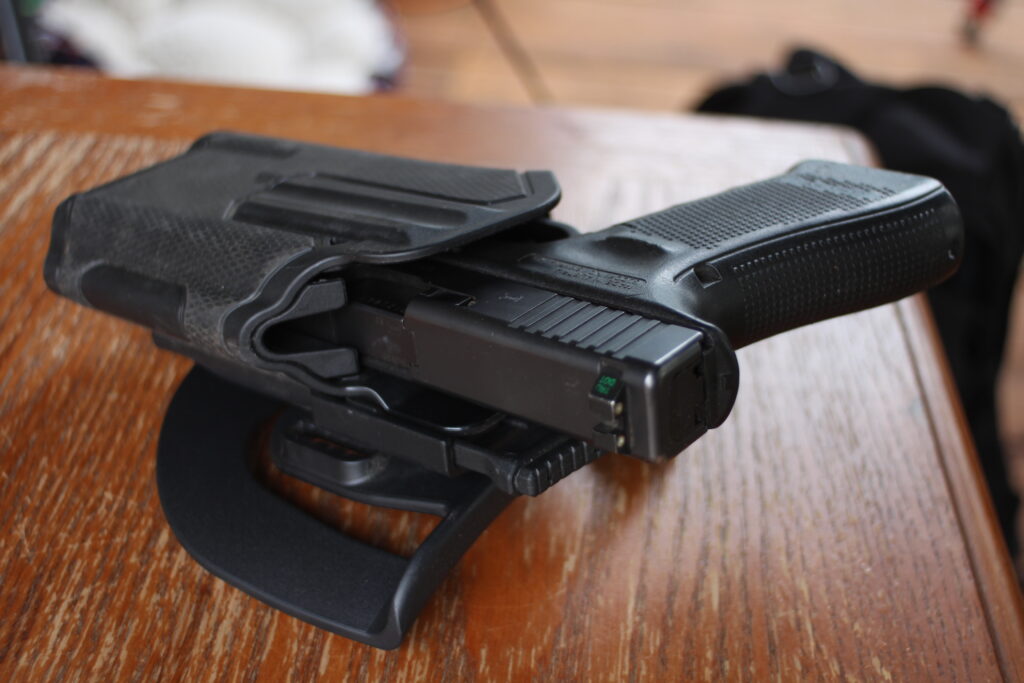
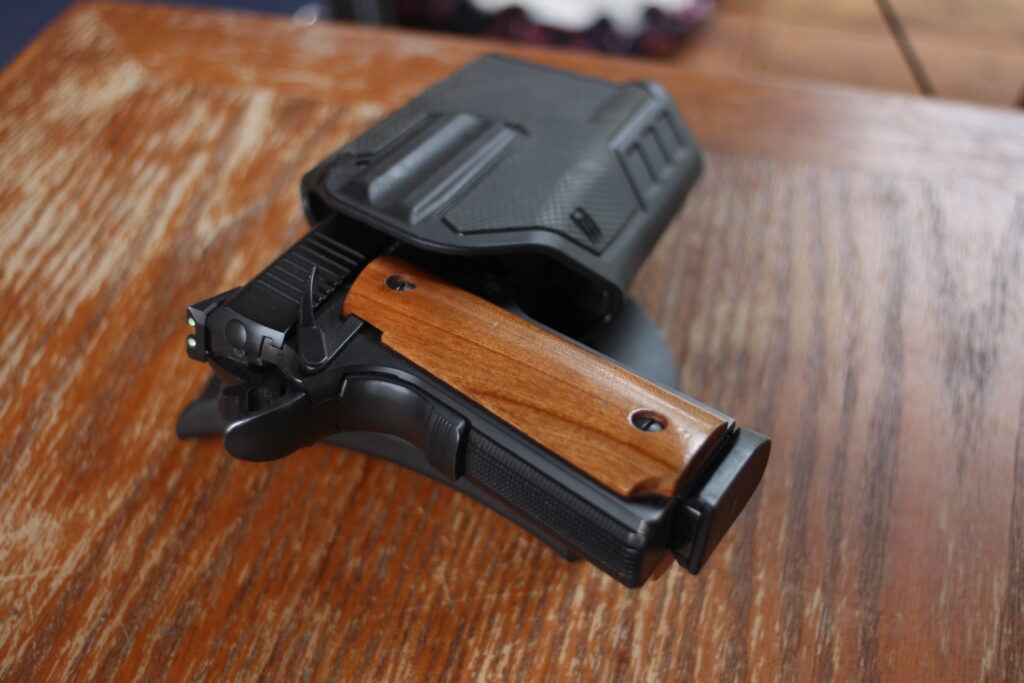
The second holster I recommend for duty, woods walking, or end of the world is the Blackhawk Omnivore. I love this holster so much I recommend it to anyone who asks. It can be found here- https://amzn.to/4x3vMjp. This holster is great because of how utilitarian it is, it indexes on the light so that means you can use the same holster for any firearm you have with that light. I have used it for different Glocks, Sigs, 1911’s, all in the same range day. No fussing with screws, or adjustments. I convinced Brad to get one for his Glock 17 gen 4. He loves it and takes it out on every adventure we go on. It has level 1 retention so it doesn’t take a masters degree in engineering to figure out, but also stays put when we are hiking through dense brush. I occasionally carry this holster for duty, and I have not had an issue with it. Nowhere near as many draws and re holsters, but I would say probably in the 2000’s mark.
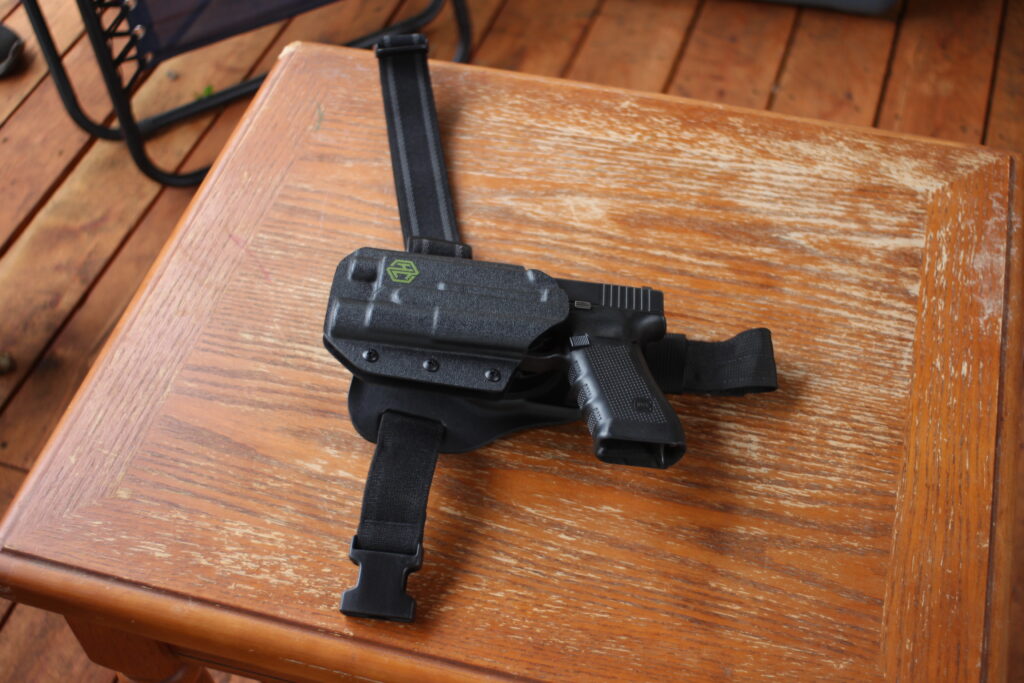
Now on to drop leg holsters. Depending on your situation a leg holster maybe the ticket. I carried one in Iraq. The reason? There was no way to attach a holster to my belt. Armor, Mags, IFAK, Radio, and other stuff. Belt holsters take up a lot of real estate and that’s where a leg holster shines. It drops the gun out of the way leaving more room for movement, armor, and more things on your belt. My favorite part bout leg holsters is when sitting for long periods of time, the gun doesn’t dig into your side. Over time this can be painful. It can also be easier to draw with full kit on. It may seem weird, but I have also found I have more movement with a leg holster. With armor and kit on, turning can be difficult when the holster rubs against the fabric.
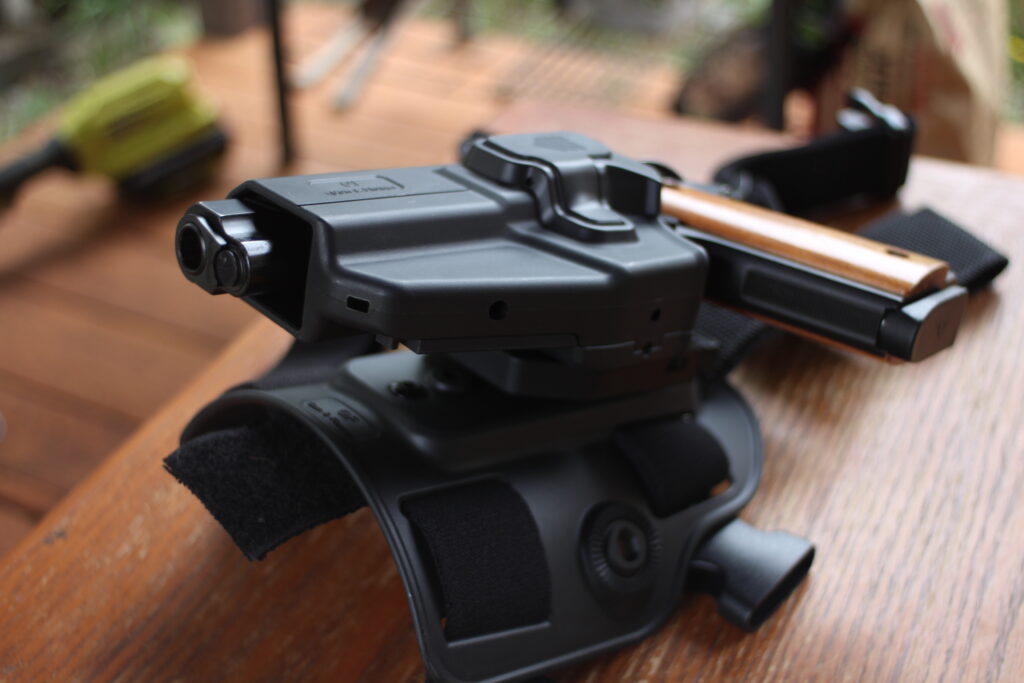
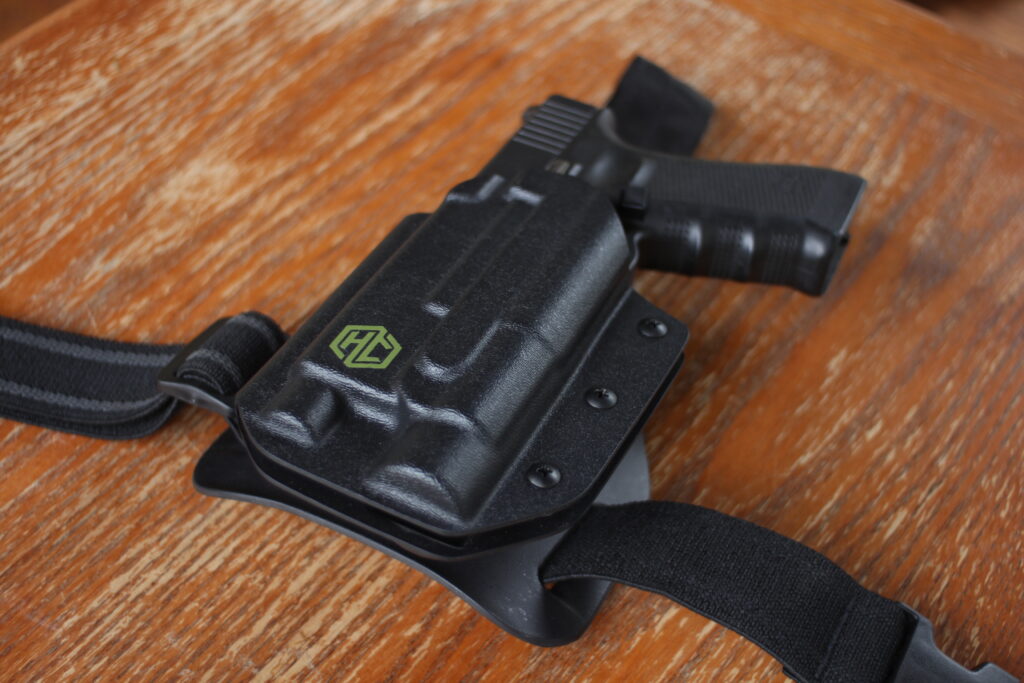
The first leg holster I own has no retention other than friction, and is specifically for the woods, or end of the world. It was special order from HolsterCo they can be found here. https://www.miholsterco.com. Your gun and light setup maybe different but the holster I have is high quality. We wont make any money off this, but feel free to use them. Everything I have gotten fro HolsterCo has been quality. In the video, you will see my movements are jerky and slow. I do not train with this holster consistently and it shows. Again, for me the usage is very narrow. Woods or end of the world and we aren’t there yet.
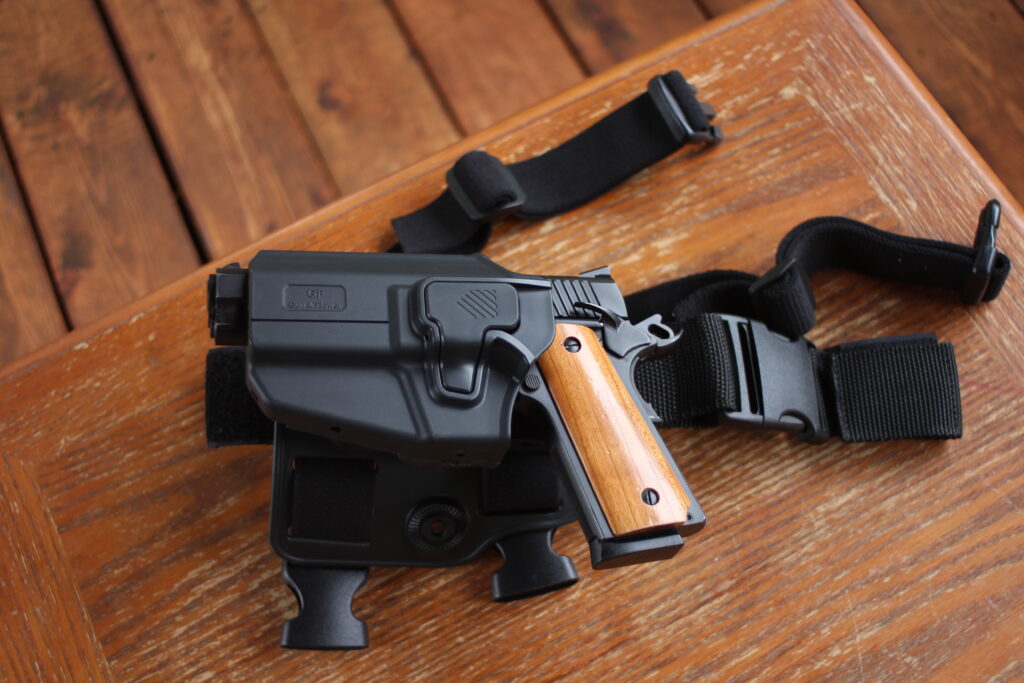
The second leg holster I own is single stage retention, and it can fit multiple firearms with minor adjustments. It can be picked up here- https://amzn.to/4o56RYG . I got it specifically for my 1911, and Para 1911. The Para is a double stacked 1911 with double the grip size of a normal 1911 so that makes finding holsters for it more difficult. While it is obviously made in China, I like how universal it is. It indexes off the trigger guard, and has 3 adjustment spots. One is a completely different piece you put inside so it will fit guns with a wider trigger guard (Glocks). The other 2 adjustments are screws you move up and down with the included hex key. These adjust tilt and friction retention. Just like a Blackhawk Serpa holster there is a button on the side you press and draw the gun. Sometimes people get weird about that, saying you could shoot yourself because your finger may accidentally end up inside the trigger guard. I have never seen this, and if you train to index your finger when drawing this wont ever be an issue. The other concern I have heard is, dirt between the button and firearm. This is more believable as I have had holsters quit working because they are dirty. Just like periodic weapons maintenance, holsters need love too.
For most Minutemen the number one form of retention will be concealed carrying. If no one knows you are carrying a firearm it makes you less of a target, and no one will be walking up to you with the intent to take your gun from you. If I am not working I am carrying concealed. I have conceal carried everything from a Smith and Wesson Airweight to a Glock 22 Over the last 16 years I have paired down my concealed carry options significantly. The rest of the holsters we will be going over have no retention other than being concealed. Remember it isn’t concealed if you are printing, or it sticks out when you move around.
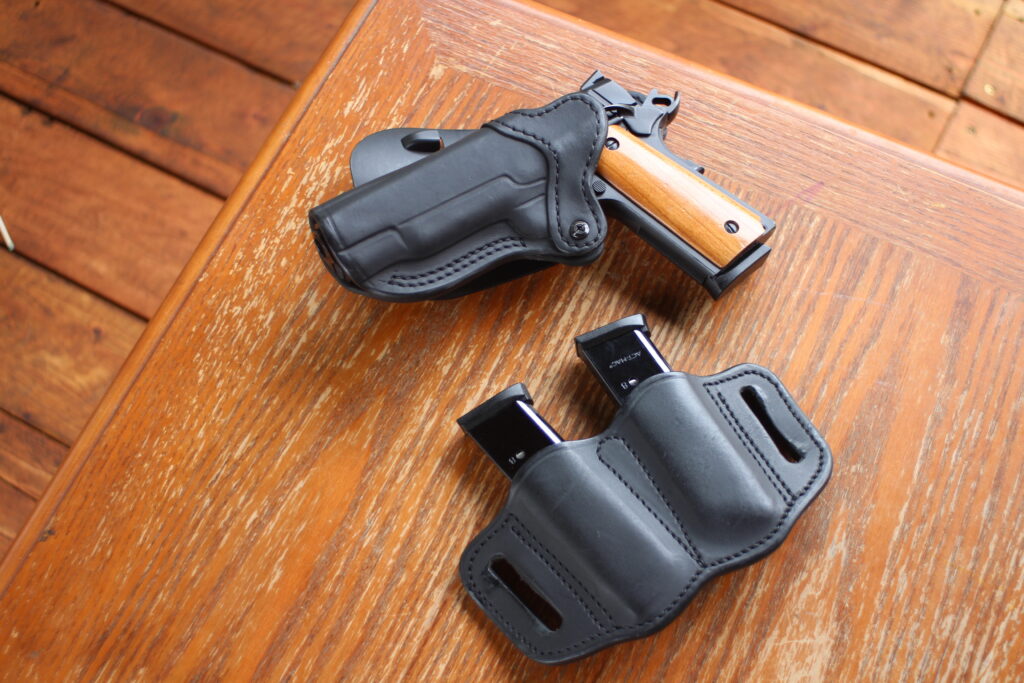
The first holster is the 1791 Gun Leather 1911 paddle holster it is an OWB (outside the waistband). Here is the link, https://amzn.to/4vgkQgy . This holster is one of the highest quality leather holsters I have ever found. They are made right here in Montana, and they appear over built to me. I bought this holster a year ago, and it took about a month for it to break in. The break in consisted of putting the gun in the holster with a grocery bag around it. At first I had extreme difficulty getting it out of the holster, but the leather finally broke in enough it is now perfect friction retention. I carry it off duty a bunch, and when I have court. Something about black leather with an oak grip 1911 just looks good. The holster has a paddle and can be adjusted 15 degrees either forward or back, and the paddle slips over my belt without issue. I also picked up the mag holder, which was just as difficult to break in. Here is the link https://amzn.to/4uKeDtx. This holster will probably last the rest of my career without issue.
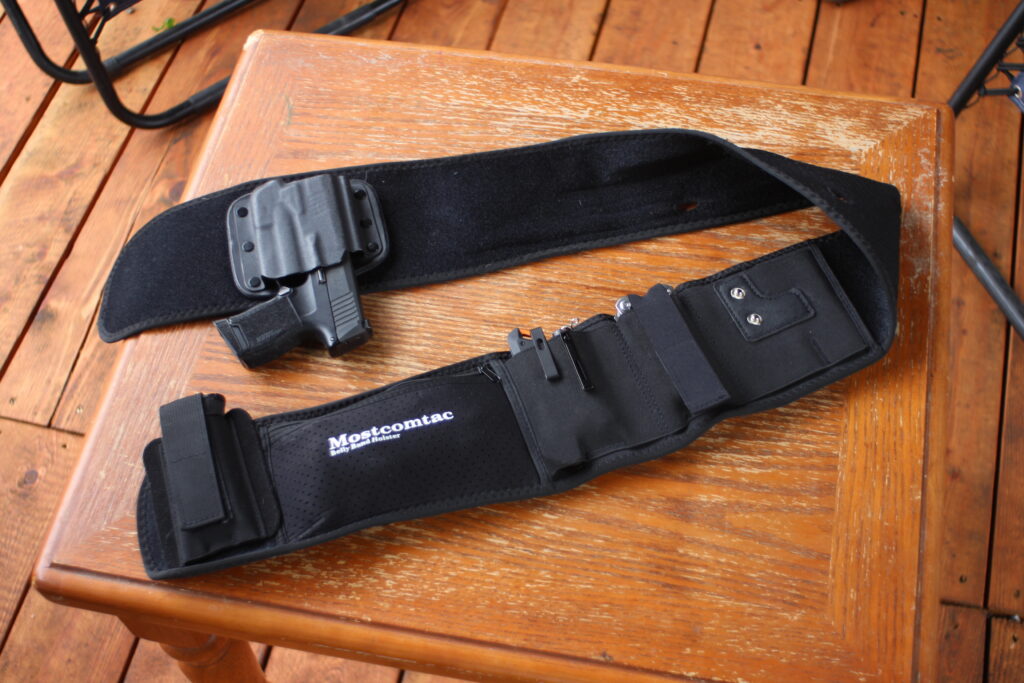
I use a belly band daily. I enjoy being able to run around in Crocs and gym shorts with a T-shirt in the summer, and a belly band helps me do that. https://amzn.to/4o4N0bZ is the link to the belly band I use.
Do not use the factory “gun holster.” It’s just an elastic pouch. I have never had good luck with those, and something always gets stuck—usually the front sight.
I went with a CrossBreed Velcro-backed Kydex holster for my Sig P365 with a Streamlight TLR-6 attached. There is no Amazon link for it, but you can pick one up for your particular setup here: https://www.crossbreedholsters.com/category/modular-systems/
We also have a video on our everyday carry setup, which can be found here: https://youtu.be/i1iYG2yPNZ4
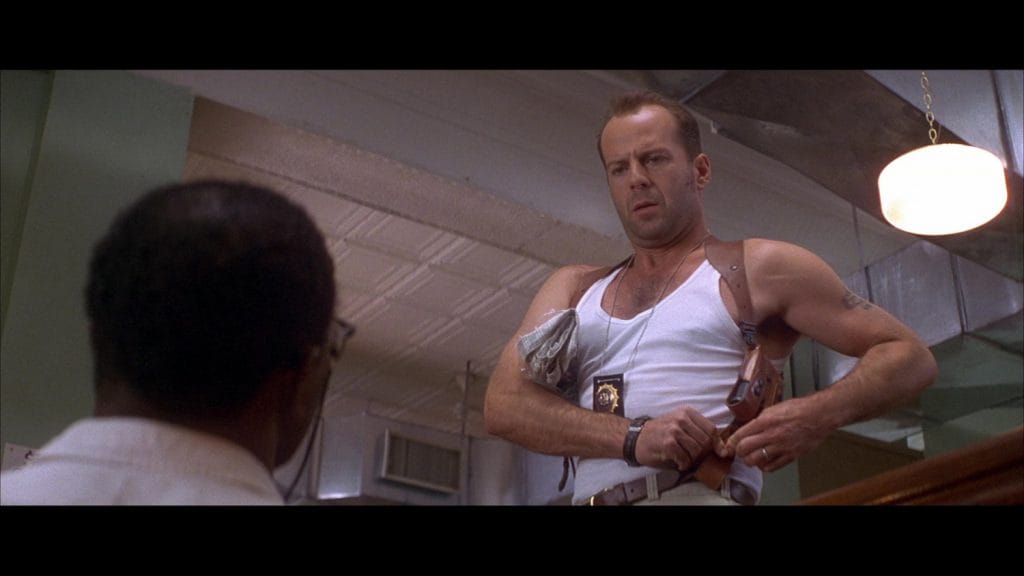
I love shoulder holsters. They ooze class while still being practical. When wearing a suit, there is nothing classier than a shoulder holster paired with a wood-gripped 1911.
A lot of people I know wear shoulder holsters while riding motorcycles because they are constantly bent forward while riding. It provides easy access to a firearm in that position.
I also wear one while field training new officers. My department policy requires me to wear body armor and carry a firearm at all times while on duty. During portions of field training, I have to be in plain clothes while still complying with policy. In those situations, I wear a large shirt with body armor underneath and a shoulder holster over the armor. It’s completely covered and cannot be seen.
Plus, John McClane carried one in Die Hard, and I think that’s badass.
I won’t be providing an Amazon link because the holster I use is no longer in production.
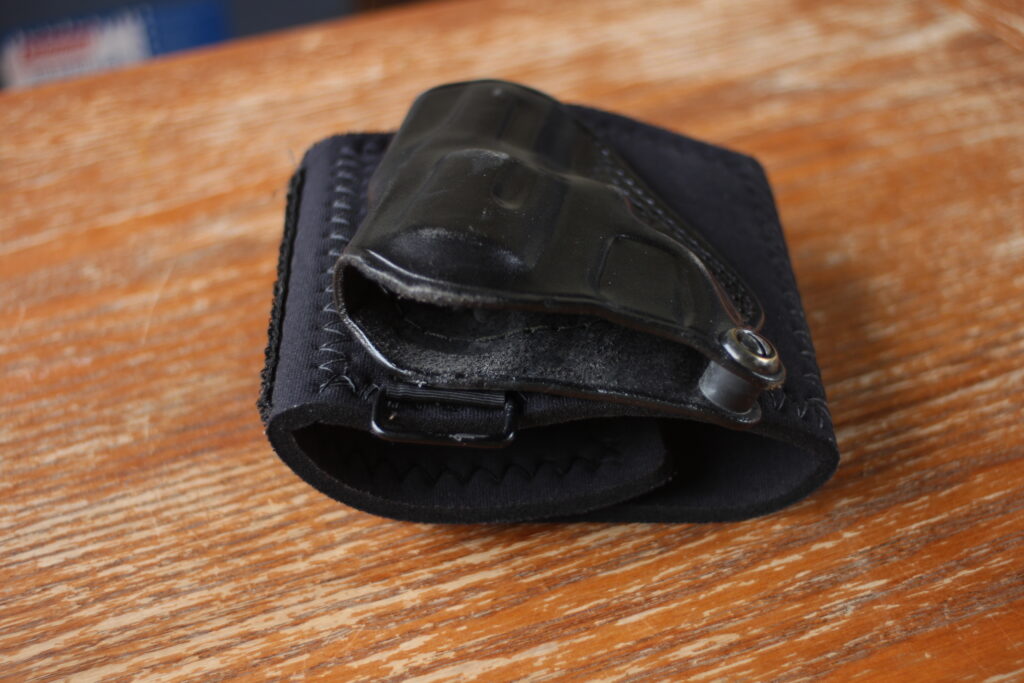
The next holster I’ll be covering is an ankle holster. These are definitely niche, but the situations where they are useful can be life or death.
Ankle holsters are a last-ditch option when someone is on top of you and you can’t access your primary firearm. I carry mine on my non-dominant side ankle. If someone is on top of you, you can access it more easily and bring it into the fight.
This is also one reason revolvers are still useful. You can’t push a revolver out of battery.
I use a Smith & Wesson Airweight in my Galco holster. It can be found here: https://amzn.to/4g0Ka5L
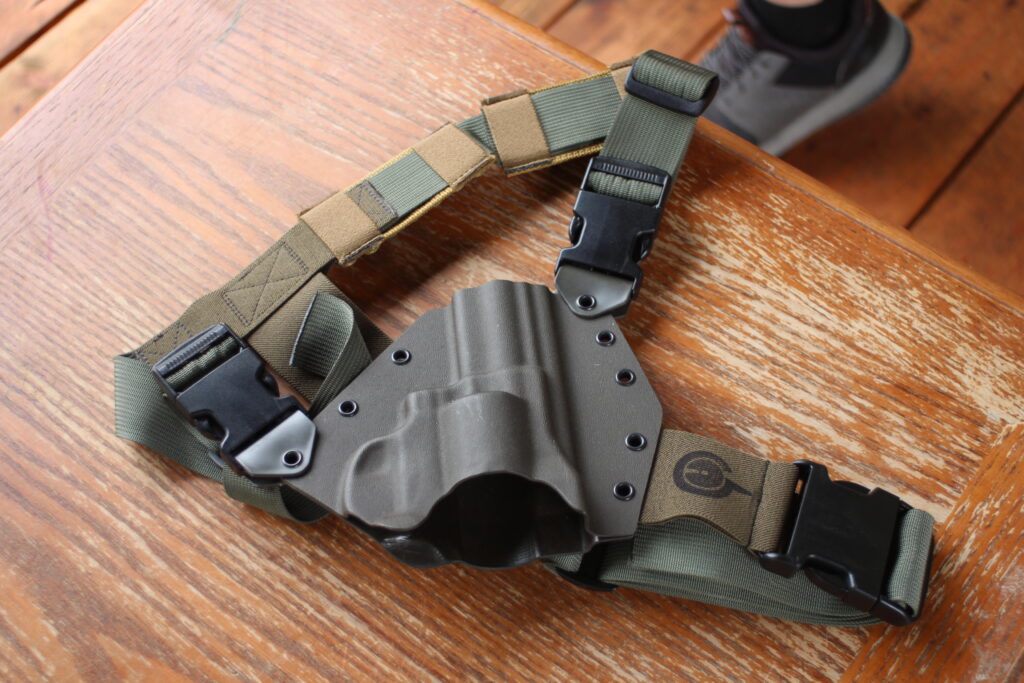
The last holster I’ll be covering is a chest holster for my Ruger GP100.
When hiking, I’ve found it easier to access my pistol when it’s out of the way of my backpack. I don’t use it very often, and it’s awkward in most situations when I’m not wearing a pack. Drawing from it can be a hassle, and I simply don’t train with it very much.
Again, it’s in the box with holsters I don’t use often, so I won’t be including a link for this one.
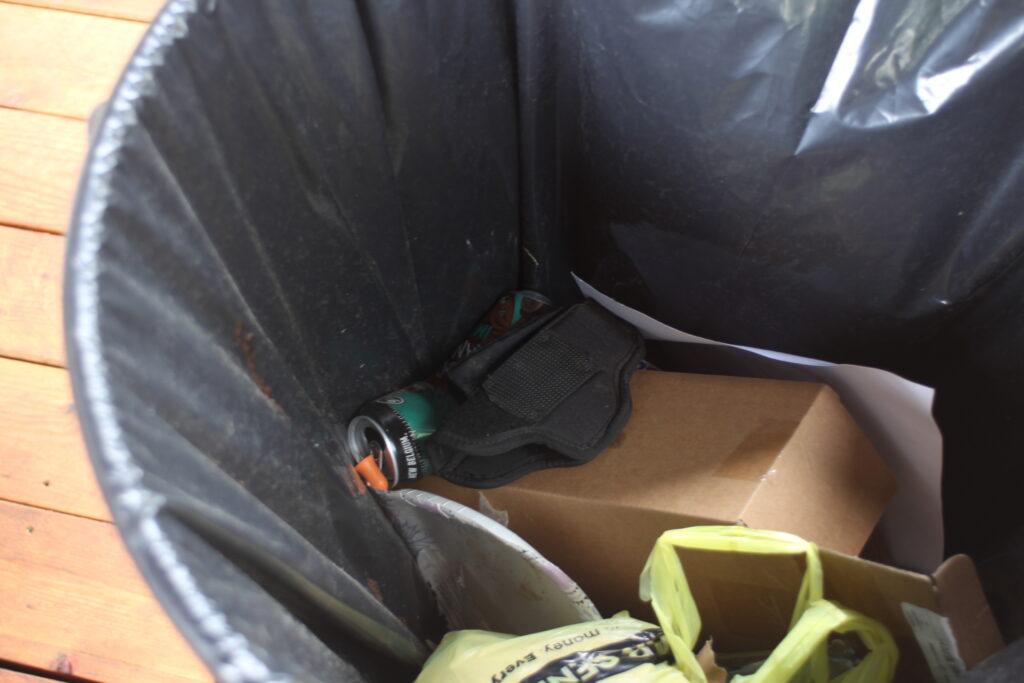
Don’t waste your time with Uncle Mike’s holsters. They are cheap, low-quality, and cannot be relied upon when seconds count.
There is a time and place for them—called never, and in the trash.
I really hope you guys enjoy the blog and the full-length video. It took four weeks to film the video, find all the links, and write this blog, but this information is important.
After buying a pistol you plan to carry, your next purchases should be ammunition and a quality holster. Extra magazines come after that.
Until next time, thank you for reading!
Ian
