Weekly Blog #5 – Training Habits
Hello and welcome to the 5th weekly blog.
In this week’s blog, I will be going over good training habits. This will be more of an opinion piece based on my own training and experience.
Since the age of 17, I have been involved in some form of service-related profession. From soldier, to EMT, to firefighter, to police officer, everything I have done has involved training that is vital to doing the job correctly. Not only initial training—basic training, advanced individual training, academies, tests, practical exercises, and scenarios—but also continuing education. Firefighters and EMTs have CEUs (Continuing Education Units), police officers have required training hours, and the Army had Warrior Tasks and Drills (at least that’s what they were called when I served).
Over the last 20 years, I have learned a very important lesson: there are two types of people—those who talk about being the “tip of the spear,” and those who actually are the “tip of the spear.” Boiled down, it takes work to be the best at anything you do.
I’ll use law enforcement as an example because it is my current career and something I can speak on from personal experience. In my local area, there are law enforcement officers who believe in “rising to the occasion,” or who literally think that “adrenaline will see me through this.” I can tell you from experience that relying on a chemical reaction to replace fitness and training is a dangerous game to play.
When faced with life-or-death situations, humans fall back on their lowest level of training. I have seen it in the military, law enforcement, and the fire service. When faced with real problems, I have watched people revert back to outdated techniques they learned in the academy decades ago.
One of the best examples I have of this is the over reliance on the Taser. It has overwhelmingly become the go-to option when officers feel threatened. Suspect becoming aggressive? Go to the Taser. Suspect running? Go to the Taser. Bar fight and suspects refusing verbal commands? Go to the Taser.
But what happens when the suspect is wearing baggy clothing, a winter coat, or you simply miss? You only get two shots, so what is your backup plan?
My approach is the opposite. In most situations, I prefer going hands-on because I train and know how to fight. As a law enforcement officer, I have been kicked, punched, nearly headbutted, and almost bitten, but I have only drawn my Taser on another human being twice in 10 years. I have only discharged it once because there was no other option at the time—a small enclosed space with too many hazards around us.
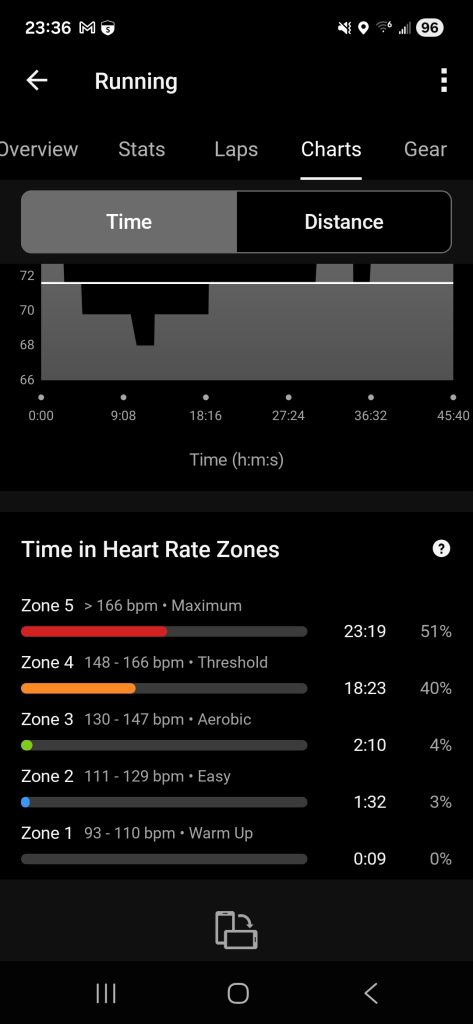
On my off time, I train Brazilian Jiu-Jitsu and work out regularly—both cardio and weights, not just one or the other. I also have a life-size 200-pound training dummy that I use to practice kicks, punches, strikes, and holds. His name is “Bad Guy Bob.” I usually train with him after a 3-mile run so I am already exhausted. I do this because I want to train at my lowest point, when I’ve already hit that wall.
In real life, the enemy gets a say in how things go, and we need to remember that. I may have to chase a suspect and then immediately go hands-on—that’s usually how it happens.
You can pick one up here: https://amzn.to/4dkILp9
I understand the price is high, and you are under no obligation to buy one. However, I can recommend it based on personal experience. I have put it through plenty of “beat downs,” and it has held up extremely well. It’s made of durable plastic, so cleanup is simple afterward. I originally found these at the police academy.
One word of caution: if you decide to get one, I highly recommend investing in a good pair of fighting gloves. The plastic material can cause serious rug burn and tear skin off your hands during extended training sessions. These are the gloves I use, and they’ve lasted me for years: https://amzn.to/4dRNcrE
This concept applies to everything: make your training difficult. Shoot in the rain, sleet, snow, extreme cold, extreme heat, and at night or after a run. As Minutemen, we do not get to choose where or when a fight happens—we simply have to react.
Training builds competence, and competence builds confidence.
I remember a saying from the Army: “It’s better to lose gallons of sweat during training than one drop of blood on the battlefield.” That saying stuck with me, and I still think about it whenever I feel lazy.
I may not be in the same shape I was during my Army days, but I am a better fighter, a more accurate shooter, and a better critical thinker than I was back then. That is because I take training seriously. If there is a class I can afford and I can get the time off to attend, I’m there. I meet with other officers one to two times a month to practice defensive tactics. I shoot at minimum once a month, but usually average two to three range sessions monthly.
To sum it up, if you consider yourself a minuteman, you need to take training seriously. Make sure you are working out, hitting the range, practicing your first aid skills, and developing physical fighting techniques.
As things continue to get stranger around the world, it will be up to you and the other people in your community to help keep your families, neighbors, and communities safe. That is a huge responsibility.
I’ll leave you with this question:
Do you want to rely on adrenaline during a life-or-death situation, or do you want to have the skills and tools necessary to protect yourself and your family with a cool head and sound judgment?
Thanks for reading!
Ian